
At the far end of Valletta, where the Grand Harbour and Marsamxett Harbour meet the open sea, Fort St Elmo occupies a position that immediately explains its history.
From its walls, the water stretches in several directions. Ships approaching Malta could be seen before they reached either harbour, making this narrow point of land one of the most strategically important places on the islands.
Fort St Elmo is often introduced through the Great Siege of 1565, and understandably so. Its defence became one of the most dramatic episodes in Maltese history. Yet the most compelling part of its story is also the most unexpected. The fort fell, but its resistance helped Malta survive. Long before the present fort existed, the site was already used as a lookout. Records refer to a permanent watch post here in 1417, showing that people understood the value of the location well before Valletta was built.
The star-shaped fort was constructed in 1552 following growing fears of an Ottoman attack. It was designed to guard the entrances to both main harbours and strengthen the defences of the Order of St John. At the time, the city of Valletta did not yet exist. The Sciberras peninsula was largely exposed, and Fort St Elmo stood at its tip as a first line of defence.
That role became brutally real in May 1565, when a vast Ottoman force arrived in Malta. Capturing Fort St Elmo would allow the attackers to control the harbour approaches and create a stronger base for the campaign against the Order. The Ottomans expected the small fort to fall quickly. Instead, its defenders resisted for almost a month. Day after day, the fort endured bombardment and repeated assaults. Its walls were damaged, supplies became harder to deliver, and casualties continued to rise. At night, reinforcements and provisions crossed the water from Fort St Angelo, while the wounded were taken back in the opposite direction.
The defence demanded more than military skill. It required people to remain inside a position that was steadily being destroyed around them. Knights, soldiers and Maltese defenders continued fighting even when the outcome at St Elmo itself was becoming clear. The fort finally fell on 23 June 1565. Almost all those left inside were killed. By the simplest measure, it was an Ottoman victory. The attackers had taken the fort and gained the position they wanted. Yet the time and resources spent capturing it had changed the wider battle.
The resistance at St Elmo delayed the Ottoman campaign and caused heavy losses. It also gave the defenders at Birgu and Senglea more time to strengthen their positions and prepare for what was coming. The fort could not save itself, but it made the next stage of the siege more difficult for the invading force.
That is why Fort St Elmo occupies such a powerful place in Malta’s memory. Its story is not one of easy triumph. It is about the difference that endurance can make, even when defeat appears unavoidable. When the Great Siege ended in September with the withdrawal of the Ottoman forces, Malta entered a new chapter. The victory brought international attention and support, while the exposed Sciberras peninsula was transformed through the creation of a new fortified city. Valletta was founded in 1566, and Fort St Elmo eventually became part of its defensive system.
The fort visitors see today is therefore not exactly the structure that faced the siege. It was repaired, enlarged and adapted repeatedly over the following centuries. Barracks, defensive walls, a church and other military features were added as warfare and technology changed.
Under British rule, Fort St Elmo was upgraded for modern artillery and continued to guard the harbour. During the Second World War, it returned to the front line. On 11 June 1940, the fort was struck during the first aerial bombardment of the Maltese Islands.
This long military life makes these visits feel like a journey through several versions of Malta. The fort speaks of the Knights and the Ottomans, but also of British rule, global conflict and the islands’ changing place in the Mediterranean. Its location adds to the experience. Looking across the Grand Harbour towards Fort St Angelo makes the geography of the Great Siege easier to understand. The distance between the two forts seems short from above, yet in 1565 that stretch of water became a dangerous route carrying food, ammunition, reinforcements and wounded men through the darkness.
Inside Fort St Elmo, the National War Museum expands the story beyond a single battle. Its displays cover thousands of years of military history, from the Bronze Age to Malta’s more recent past. Among its best-known exhibits are the Gloster Sea Gladiator named Faith, President Franklin D. Roosevelt’s Jeep, Husky, and the George Cross awarded to Malta during the Second World War.
Yet some of the fort’s most affecting spaces are quieter. The chapels dedicated to St Anne recall the spiritual life of those who lived within the walls, while the open courtyards and heavy passages reveal how the site functioned as both a military machine and a place inhabited by real people.
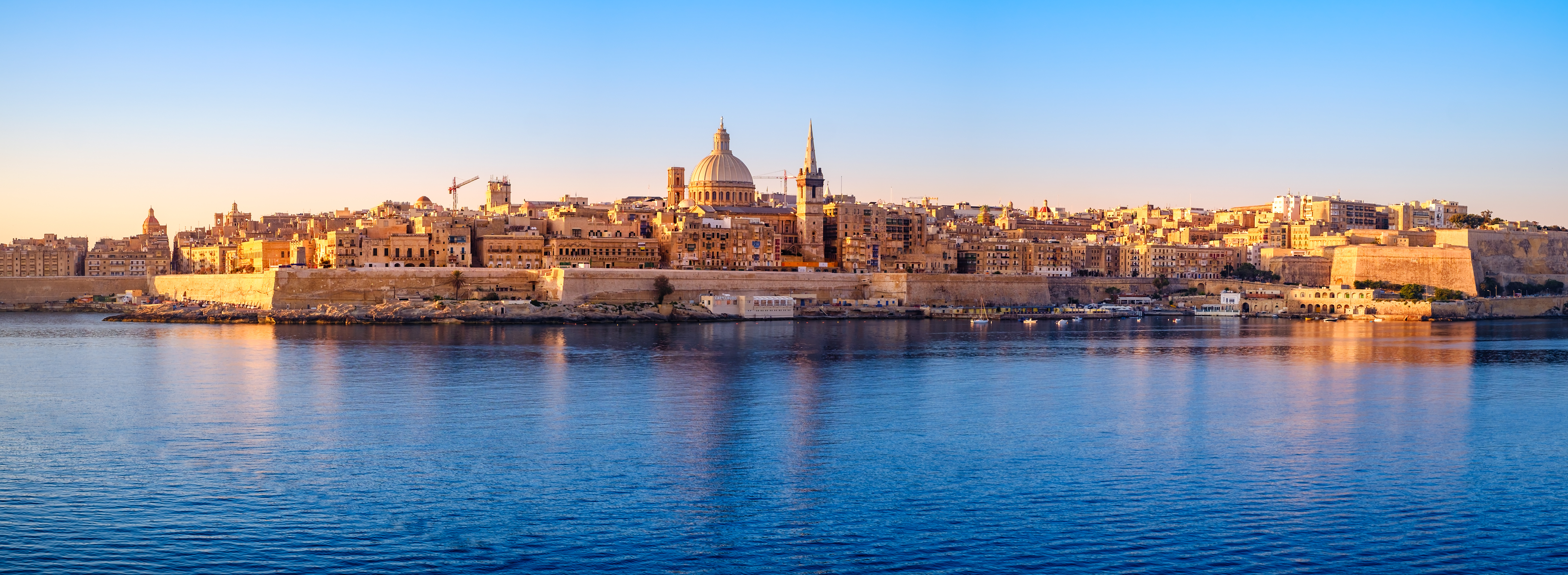
Fort St Elmo also changes with the hour. In bright daylight, its lines appear sharp and commanding. Towards sunset, the walls take on a warmer tone and the surrounding harbours begin to glow. The view is beautiful, but the history prevents it from becoming merely picturesque. For travellers, this is what makes the fort essential. It does not simply offer another panorama of Valletta. It helps explain why the city exists, why the harbour mattered so deeply and how Malta repeatedly found itself at the centre of larger struggles. There is also something universal in its story. Success is usually told through places that remained standing and forces that won. Fort St Elmo offers a more complicated idea. A place can be lost and still fulfil its purpose. Resistance can matter even in defeat.
At the edge of Valletta, the fort still watches the same two harbours it was built to defend. Its weapons are silent, and its gates now welcome visitors, but its presence remains unmistakable. Fort St Elmo fell in 1565. Its story never did.


