
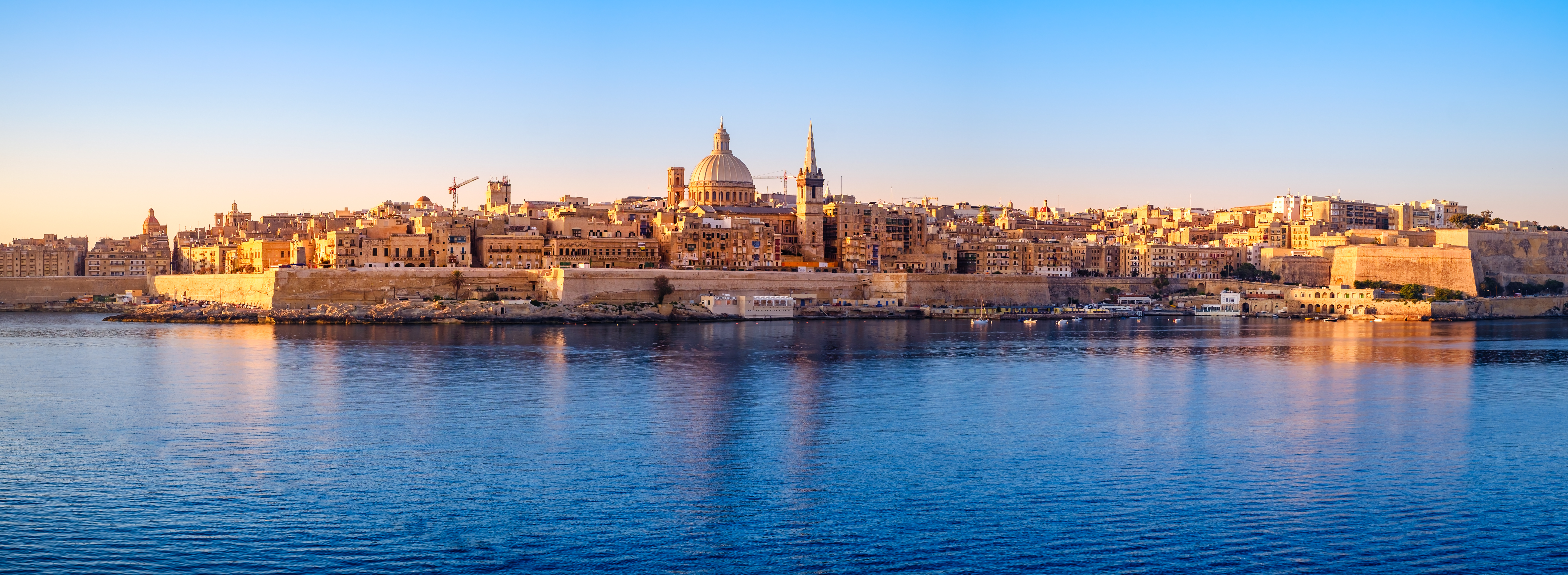
Valletta is often introduced through its balconies, churches and golden bastions, but one of its most powerful stories lies below the street. To understand the capital properly, a visitor has to move between two levels: the city that looks over the harbours, and the city that once sheltered beneath itself.
For travellers drawn to history, Malta’s Second World War story is unusually concentrated. Fort St Elmo stands at the tip of the Sceberras peninsula, facing the sea routes that made Malta strategically irresistible. Heritage Malta records that on June 11, 1940, the fort suffered the first aerial bombardment on the islands. Beneath Valletta, Underground Valletta tells another part of the same story: during the war, 17,000 tonnes of bombs were dropped over Malta, and the population moved into shelters expanded from tunnels and cisterns.
This is not heritage as spectacle. It is heritage as pressure, endurance and proximity.
Fort St Elmo And The Harbour Of Consequence

Fort St Elmo is one of Malta’s great sites because it teaches scale. From its walls, the Grand Harbour and Marsamxett are not postcard views; they are strategic realities. The fort had already faced the Ottoman siege in 1565, but its twentieth-century role gives it a modern emotional charge.
The National War Museum, housed at the fort, spans 7,000 years of Maltese military history, with the Second World War as its most represented conflict. Among its best-known artefacts are the Gloster Sea Gladiator FAITH, Roosevelt’s Jeep ‘Husky’, and the George Cross awarded to Malta for gallantry. For a visitor, these objects work because they compress geopolitics into human scale. A plane, a jeep, a medal: each makes the island’s wartime story legible.
The City Beneath The City
Underground Valletta changes the register. The city’s tunnels were not only martial spaces. They were practical systems of survival: water, drainage, storage, movement and, eventually, shelter. Heritage Malta describes Valletta’s underground as the city’s lifeline, a network that became essential when the war drove people below ground.
The experience is intimate in a way a panoramic harbour view cannot be. It asks visitors to imagine darkness, waiting, heat, fear, fatigue and a population learning to endure bombardment together. The glamour of Valletta’s streets becomes more complicated after that descent. The city above feels more beautiful because the city below explains what it survived.
How To Experience It Well
The best wartime itinerary should not rush. Begin at Fort St Elmo for the strategic view and museum context. Continue to the Upper Barrakka Gardens to read the Grand Harbour as a theatre of military consequence. Then book Underground Valletta, where the story turns inward and human.
For quality travellers, this is exactly the kind of Malta experience that rewards a private guide or curator-led approach. The facts matter, but so does pacing: when to stand still, where to look across the water, how to connect a bastion, a shelter and a family memory.
Valletta’s wartime story does not ask to be admired. It asks to be understood. In that understanding, Malta becomes more than a beautiful Mediterranean destination. It becomes a place where resilience has architecture.


