
Since its founding in 1566, Valletta has been called many things. From "city of palaces built by gentlemen for gentlemen" to "harbour of harbours", it has captured the imagination of travellers for centuries, exotic yet familiar, at once small and impossibly grand. And yet to me, it's just home.
For above the crowded streets and noisy bars, hidden behind the safety of our closed wooden balconies and carved stone façades, a threatened species defiantly survives: the Belti (from the Maltese for Valletta, "Il-Belt" or "the City").
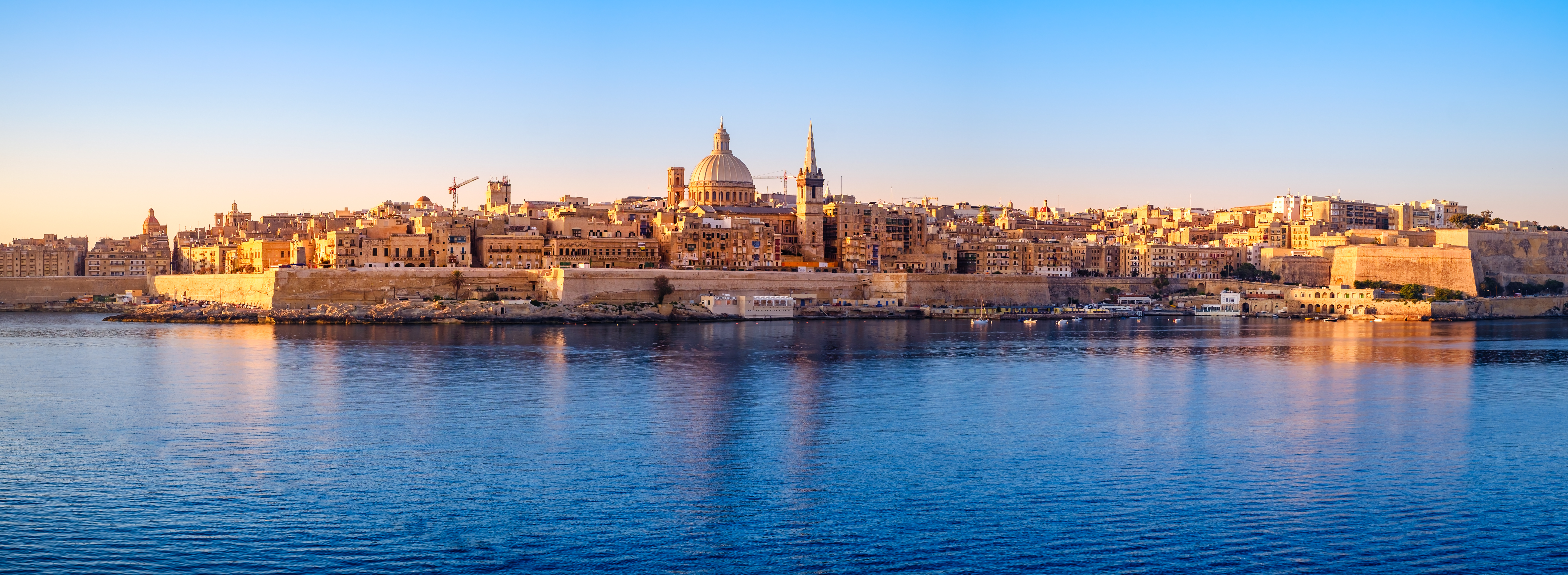
You might notice us navigating the busy city streets with impatience or nonchalance, laden with shopping or post office parcels, drinking coffee in Valletta's squares, living our varied lives within the confines of the city's bastions and only venturing outside its safety when absolutely necessary. Because Valletta is not just a place; it's a veritable state of mind.
What to look for
- The Church of Saint Augustine: Often overlooked, this beautiful church is a triumph of baroque decoration and hosts one of Malta's best organs. It is one of the churches built during the creation of the new city of Valletta, with its foundation stone being laid in 1571.
- The National Museum of Archaeology: Housed in the former Auberge de Provence, another beautiful baroque building in Republic Street, this compact museum houses some of Malta's best examples of neolithic sculpture. Look out for the Sleeping Lady and Phoenician collections.
- The Church of Saint Catherine of Italy: Home to Malta's Italian parish, this octagonal church is decorated in delicate pale greys and gilt, a true little bijou. Built in 1576 by the Italian Knights of St John, it recently underwent a major restoration.
- The National Library: Known as the Bibliotheca and located in Republic Square, Malta's first example of neoclassical architecture contains an impressive collection of Melitensia, ranging from 15th-century volumes to up-to-date newspaper and magazine archives.
- Palazzo Ferreria: A triumph of neo-baroque Victorian excess, this marvellous palace now houses a government ministry and a large clothes shop. Marvel at the carved stonework and visit the temporary exhibitions often housed there.
- Casa Rocca Piccola: A living, breathing Valletta house and home to the Marquis de Piro, this beautifully decorated 16th-century building is open to visitors looking for a peek into patrician Valletta domestic life.
A blend of social classes, ethnicities and cultures since its very beginning, Valletta is the epitome of the Mediterranean harbour city, where prelates and prostitutes, marquesses and mechanics coexist in mutual respect, breathing life into the sterile rock that serves as both foundation and protection to our hallowed city.
My family moved to Valletta from revolutionary Sicily in the late 19th century, and for five generations, we have loved our city, changing nationalities, languages and currencies myriad times, yet remaining faithful to our adoptive home. I myself have seen Valletta change, for better or for worse, but my days with her remain unaltered: a collection of shops and places that I've inherited and discovered for myself; a comforting routine that's only broken for discovery of a new treasure or favourite balcony that might take my fancy for a while.
My mornings in Valletta mean coffee, and lots of it, often at Caffé Berry on Republic Street or Café Regina on its square if I'm in the mood for people-watching or peering through the historic Casino Maltese's revolving doors and monitoring eagle-eyed the renovation of Malta's oldest member's club from a distance. It's my time to catch up on e-mails and texts, to go through my diary and plan my day, followed by a walk through St Lucy Street, known to us as it-Triq tad-Deheb ('the Gold Street') for its many silver and jewellery shops.
My great-aunt shopped at J. Azzopardi Jewellery, and charming Carm Azzopardi and his polyglot wife (her French is fantastic) still sell the beautiful silver Auntie Lina introduced me to as a little boy.
Victor Galea Haberdashery, housed behind a pale blue timber shopfront on St John's Street, stock the most marvellous buttons and ribbons in the country; they're seconds away from St John's Co-Cathedral, UNESCO World Heritage Monument and veritable triumph of sculpture, gilt and polychrome marble.
If I'm lacking in aesthetic inspiration, Casa Rocca Piccola on Republic Street, or MUŻA on Merchants Street are my go-to spots, the former a beautifully preserved, lived-in Valletta house and the latter the National Art Museum. Both are home to beautiful collections, including works by Giuseppe Calì, Malta's foremost 19th-century painter (and coincidentally also my grand-uncle). Just beside the ruined opera house is Opera Antiques, a treasure trove of antique and vintage jewellery, metres away from Edwards Lowell Book Store, stocking all of Assouline's latest publications. Mysterium Fidei Monastery, just a few metres away from Casa Rocca Piccola, is a recently unearthed treasure. Home to one of Malta's oldest orders of cloistered nuns, it is now open to the public, providing calm and quiet and a glimpse into one of Valletta's rare private gardens.
Speaking of gardens and their rarity, the Lower Barrakka Gardens, or 'my back garden' as I like to call it, offer breathtaking views of the Grand Harbour and Three Cities opposite Valletta, under the shade of their date palms and neoclassical temple. The kiosk right outside, run by the legendary Carol, is where you can spot the Beltin having their coffees or spritzers, and topping up their immaculate tans in the dead of winter.
Just round the corner on Archbishop Street is master perfumer Stephen Cordina's atelier. Pop by and try his Stigmata scent; it smells just like Valletta during Holy Week – a blend of incense, myrrh and mysticism. The recently reopened Tal-Ifwawar on St Christopher Street is the perfect place to shop for spices and culinary souvenirs, while lunch is often at home, or at No. 43, a salad bar run by the infinitely charming Hailey, or a piping-hot pea pastizz if I'm in need of comfort and (many) calories. And then, my customary nap.
The beautiful Jesuits' Church in Merchants Street, a marvel of sculpted stone and colour, is home to a varied artistic programme and is definitely worth a visit; while Teatru Manoel, Europe's oldest box theatre, is a must-do for the theatrically inclined, and will be putting on Rossini's Armida in March, an eagerly awaited event in Valletta's social calendar.
Rubino on Old Bakery Street and Trabusu Bistro on South Street are by far the loveliest restaurants for a cosy winter dinner and perfect for the post-theatre munchies. Make sure to book ahead; they're immensely popular and with good reason.
And then it's back to bed, with a good book and a cup of strong builder's tea, our house's thick stone walls (and my trusty earplugs) sheltering me from the hustle of night-time Valletta, only to rediscover it the following morning – my favourite city of beauty and contradictions.
Home.
Michele Tufigno is the creative director of Studio Tufigno, a consultancy practice based in Valletta and focused on interior decoration, arts consultancy and curation within the spheres of publishing and contemporary art.


